Andrea Pinna
Research Unit Coordinator
DLT Interoperability and Sustainability.
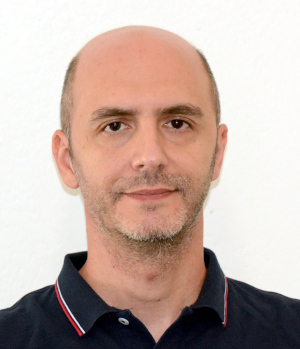 |
Andrea Pinna is a researcher at the University of Cagliari. He coordinates research activities in Blockchain and DLT interoperability, decentralized infrastructures and software sustainability, and serves as Scientific Lead of the SETI Research Unit. His work combines blockchain-oriented software engineering, empirical software engineering and the development of software systems for scientific applications. |

Researc Unit
The unit includes three research areas.
Area DLT Interoperability and DePIN
This research area investigates how heterogeneous distributed ledgers, smart contracts and physical infrastructures can exchange data and execute operations securely. Current topics include cross-chain and blockchain-agnostic protocols, permissioned DLTs, smart-contract platforms, digital identity, privacy, data provenance, the Internet of Things and Decentralized Physical Infrastructure Networks.
People
- Azmath Ullah, PhD student, University of Cagliari
- Matteo Vaccargiu, PhD, Research Associate, University of Hohenheim, Germany
- Daniele Orrù University of Cagliari
- Alice Zonca University of Cagliari
- Michele Tronu, intern, University of Cagliari
- Lorenzo Palumbo, intern, University of Cagliari
- Mauro Piras, intern, University of Cagliari
- Salvatore Madeddu, intern, University of Cagliari
Projects and collaborations. Current activities include the scientific coordination of research objectives in the MASSIVE and ABATA projects, participation in the SERICS research programme, and contributions to the Italian Blockchain Service Infrastructure. The unit collaborates with research groups at the University of Perugia and with the Italian Distributed Ledger Technology community. Applied research activities on blockchain interoperability have also been carried out through Agile By Chain, including ZeroBridge and the EBSI Tender.
Area Software Sustainability
This research area investigates the sustainability of software projects, with particular reference to blockchain-oriented systems, and their development communities. Sustainability is considered a systemic property encompassing technical, individual, social, economic and environmental dimensions and their effects over time. Research activities include empirical software engineering, technical debt, long-term thinking, AI-assisted development, human factors, developer communication and psychological safety in virtual Agile teams.
People
- Giacomo Francesco Ibba, PhD, Research Collaborator, University of Cagliari
- Matteo Vaccargiu, PhD, Research Associate, University of Hohenheim, Germany
- Samuele Mannai, University of Cagliari
- Alessandro Aroni, intern, University of Cagliari
- Filippo Puddu, intern, University of Cagliari
Projects and collaborations. Research activities are conducted in collaboration with software engineering groups at University College London, LUT University and the Federal University of São Carlos. The work focuses on empirical software engineering, mining software repositories, human factors, virtual Agile teams, psychological safety and the long-term evolution of software systems. Software sustainability methods also support the experimental design and validation of DLT projects.
Area SETI Research
The SETI Research unit develops and evaluates software for processing and classifying radio-astronomical signals in the search for potential technosignatures. Current activities include the evolution of the BLISS software ecosystem, the analysis of narrowband radio signals and the validation of anomaly-detection pipelines for observations from the Sardinia Radio Telescope.
People
- Giacomo Boggio, intern, University of Cagliari
- Alessandro Mastrone, intern, University of Cagliari
- Gianflavio Orrù, intern, University of Cagliari
Responsibilities and collaborations. Andrea Pinna is Scientific Lead of the SETI Research Unit, established in collaboration with the INAF Cagliari Astronomical Observatory. The unit contributes to the international Breakthrough Listen initiative and develops software pipelines for narrowband radio-signal processing, anomaly detection and the search for potential technosignatures using observations from the Sardinia Radio Telescope.
Scientific profile
Andrea Pinna obtained the national scientific abilitation (ASN) in the sectors “Informatics” and “Information Processing Systems”. He is the author of more than 60 scientific publications and has contributed to national and international research initiatives concerning blockchain, smart contracts, software engineering and decentralized infrastructures.
A list of his publications is available on ResearchGate and Google Scholar.
Since 2020, he has been a co-founder of Agile By Chain, a spin-off of the University of Cagliari focused on blockchain consulting, applied research and technology-transfer projects. Activities conducted through the spin-off include ZeroBridge and the EBSI Tender.
Since 2023, he has been a member of the Infrastructure Group of the Italian Blockchain Service Infrastructure (IBSI).
Since 2024, he has been a member of the Italian DLT Working Group.
He has organized numerous editions of world-class workshops on blockchain technology and software engineering, such as the WETSEB, IWBOSE, and XP series, as well as DLT2026.
Teaching activity and supervised theses
Andrea Pinna teaches Blockchain and Smart Contract at the University of Cagliari. He has supervised numerous bachelor’s and master’s theses on topics related to the study and development of blockchain-oriented applications, DLT, smart contract languages and platforms, software engineering, and software sustainability. The complete list of courses and theses is available on the teaching activities page.